About the Book — They Cannot Understand
They Cannot Understand is a groundbreaking work of Autistic Epistemology — a book that refuses to treat autism as an object of study, and instead takes autism as the origin of knowledge. Timothy Speed develops a theory from within neurodivergent perception, not about it. Autistic thinking is not translated into neurotypical categories — it becomes the philosophical and scientific baseline.
Drawing from Critical Autism Studies, Artistic Research, System Theory and socioeconomic analysis, the book formulates a radically new ontology of reality, in which existence is not an isolated object but a resonant, embodied process. The core thesis is simple and devastating:
We cannot exist and be understood at the same time.
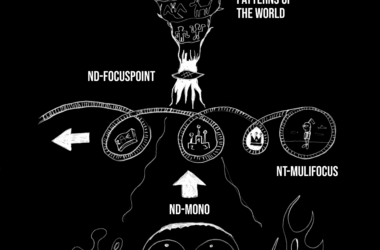
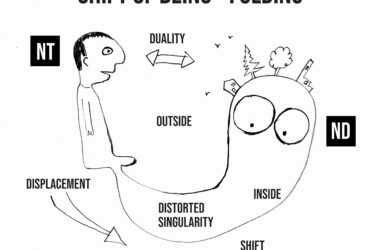
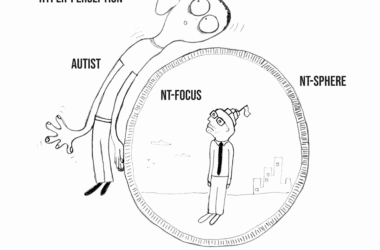
Neurotypical and neurodivergent worlds are ontologically incompatible, because each mode of perception bends reality in a different way. What appears as “deficit” in autism is revealed as high-resolution relational perception, and what appears as “normality” is revealed as a collapse of complexity caused by material, hierarchical social systems.
The book exposes this split and follows its consequences through multiple domains:
science and truth
work and value
capitalism and exclusion
masking and identity
trauma, social violence and state control
Speed argues that the misreading of neurodivergence is not a psychological misunderstanding — it is a structural deformation of reality. Neurotypical systems (economics, politics, psychiatry, media) mistake dominance for truth, and turn neurodivergent perception into pathology. The result is epistemic injustice, persecution and the forced disappearance of neurodivergent lived reality.
The book does not seek reconciliation through adaptation to the norm. It points in eine andere Richtung:
The goal is not to integrate neurodivergent people into a broken system,
but to expand the system until neurodivergent existence becomes co-author of reality.
They Cannot Understand is both theory and personal testimony, written in an intentionally autistic form — spiralling, layered, embodied, intolerant of simplification. It builds knowledge through resonance, not through abstraction.
It is a warning, a philosophy, and a blueprint for a future in which complexity, diversity and embodied truth are no longer treated as threats — but as the missing foundation of a humane civilisation.